Made hidden revenue visible and actionable
Claims and documents are analyzed and prioritized to surface revenue opportunities.
What they wanted
Organizations needed a way to identify missed revenue opportunities without increasing manual workload. They weren’t looking for more data. They needed a way to focus on what actually mattered.
The problem
The information was already there. It just wasn’t usable. • Claims and supporting documents were stored as PDFs and fragmented data • Teams spent hours reviewing documents manually • High-value opportunities were buried among low-priority cases • Decisions were slow and inconsistent
By the time a case was escalated, the opportunity was often reduced or lost.
What was getting in the way
Existing approaches failed to turn data into decisions.
Information was unstructured and difficult to interpret
Tools focused on storing data, not prioritizing it
Manual review created bottlenecks
There was no consistent way to evaluate risk, value, and next steps
Teams had access to the data, but not to clarity.
THE VALIDATION PHASE
Validating the workflow first saved months of development on features that wouldn't have moved the needle.
Reviewed
Value
Acting On
What was done
Instead of reviewing everything, the system was designed to focus only on what matters. • Documents such as claims and PDFs became structured inputs for decision-making • Each case was evaluated to identify risk, value, and next action • Low-impact cases were filtered out early • High-value opportunities were surfaced immediately
Results were no longer buried in data. They were made visible in real time.
Here’s what that looks like in practice.
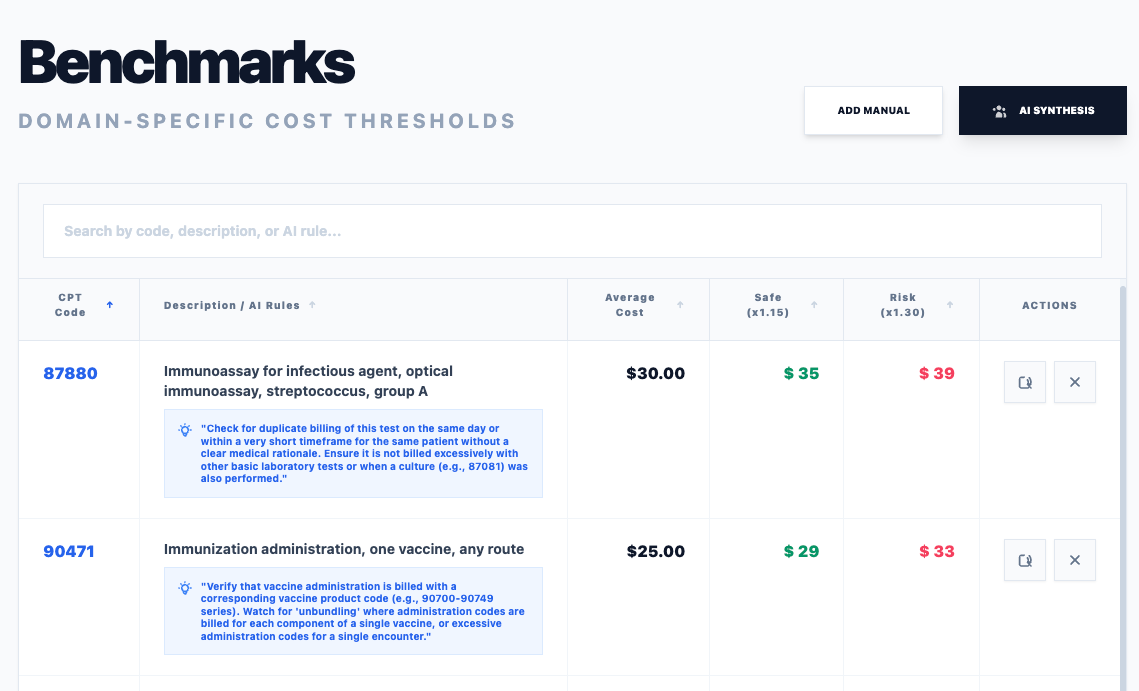
Each case is automatically analyzed to highlight expected cost, safe thresholds, and potential risk before action is taken.
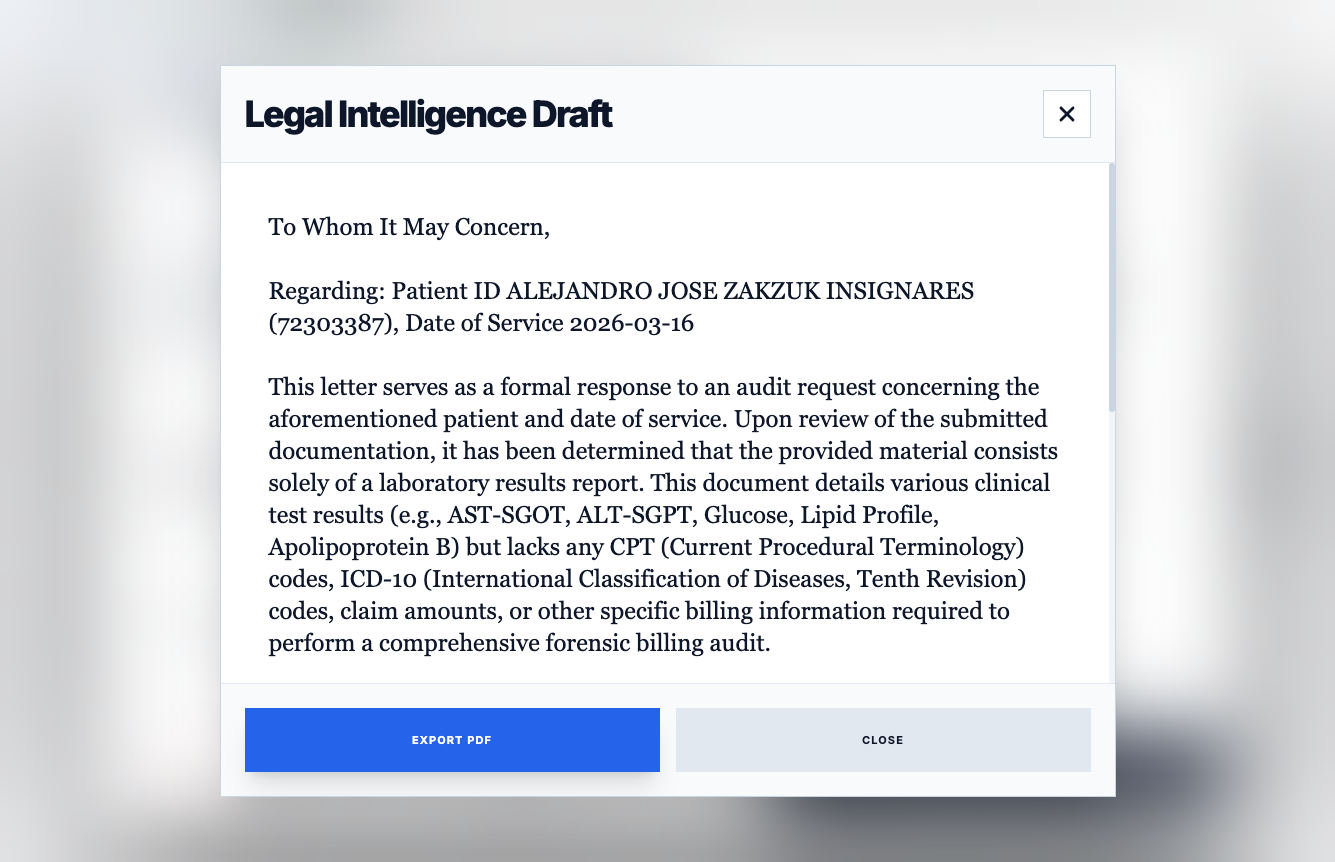
Each case can generate a structured response, helping teams act on findings immediately without additional manual work.
What changed
Work shifted from reading documents to acting on insights. The system didn't just process data; it prioritized the most valuable opportunities for the team.
Teams could focus on what mattered without reviewing everything.
Time previously spent on low-impact documents was eliminated.
Decisions were structured, repeatable, and no longer dependent on manual judgment.
We weren’t missing data. We were reviewing the wrong things.
A large portion of effort was being spent on documents that had no financial impact. Once that became clear, the system was designed to prioritize what actually drives outcomes.
The problem isn't the tools. It's how systems are designed and prioritized.
If your team is working harder but not getting better results, the problem isn't effort. It's where you're focusing.
Start with validation. That's where clarity begins.
The same approach can be applied to operational systems.