AI System Development
Embed intelligence into the way the business operates.
AI creates value when it improves decisions, workflows, and operational consistency. It creates risk when it sits beside the business as another disconnected tool.
Soluntech helps organizations design AI systems that work inside real operations, with the data, controls, feedback, and trust required for production use.

Intelligence logic
Data, decisions, workflow, and feedback need to stay connected.
AI pilots often fail before they reach operations.
Many leadership teams have experimented with AI. The early promise is real, but the operational path is harder. Teams still spend hours analyzing information. Critical knowledge remains trapped in people, documents, and disconnected systems. Valuable data exists, but it does not reliably shape decisions.
The issue is rarely the model alone. AI becomes useful only when it fits the workflow, the data is trustworthy, users understand when to rely on it, and the system can learn from real outcomes.
AI System Development is the discipline of turning intelligence into part of the operating system of the business, not a demonstration that lives outside it.
When AI system development becomes necessary
AI development services become valuable when the organization needs intelligence to support recurring work, decisions, and knowledge flows in production.
The organization is using expert attention for repeated interpretation, but the work still needs reliability, context, and review.
What production AI needs
- Which interpretation tasks repeat
- What context the AI must understand
- Where human review should remain
The AI system should support interpretation inside the workflow rather than becoming a separate tool.
What we build
We build AI systems around operational value, not isolated features.
Soluntech provides Enterprise AI Development and AI Software Development for organizations that need intelligence embedded into business systems. The work may include AI assistants, AI agents, document intelligence, decision support, predictive workflows, operational AI, clinical AI, and knowledge systems.
The strongest AI initiatives begin with a clear operating question: which decision, workflow, or knowledge gap should become easier to manage? From there, we design the data flows, user experience, model behavior, review paths, and system integrations required for sustainable adoption.
AI System Development often connects with Workflow Automation when intelligence needs to support process execution, with Custom Software Development when AI belongs inside a tailored platform, and with Dedicated Development Teams when the organization needs sustained engineering capacity to bring AI systems into production. If the data and workflows live inside older platforms, Legacy System Modernization may be required before AI can operate reliably.
AI Assistants
Role-aware assistants that help users retrieve, interpret, and act on trusted organizational information.
AI should make the business easier to understand, decide, and operate.
Common AI initiatives
- AI assistants and role-based copilots01
- AI agents with controlled execution paths02
- Knowledge systems and retrieval experiences03
- Document intelligence and classification04
- Decision support and predictive workflows05
How we build AI systems
Our approach embeds AI into operational systems instead of delivering disconnected AI tools.
Define the operational decision
We clarify the workflow, user, data, risk, and business outcome the AI system should improve.
Design the intelligence layer
We shape model behavior, data access, human review, permissions, feedback loops, and trust boundaries.
Engineer for production use
We integrate AI into the system where work happens, then measure whether it improves decisions and execution.
What better AI systems make possible
The value of AI is not novelty. The value is better decisions, clearer operations, and more useful organizational knowledge.
Faster decisions
Teams can find, interpret, and act on relevant information with less manual analysis.
Better operational consistency
Recurring decisions become supported by shared signals, criteria, and context.
Higher productivity
People spend less time on repetitive interpretation and more time on judgment, relationships, and execution.
Better use of knowledge
Documents, data, and institutional expertise become more accessible inside daily work.
Sustainable AI adoption
AI is designed with trust, governance, feedback, and workflow fit from the beginning.
Stronger system intelligence
The business system becomes better at sensing, recommending, and learning from real outcomes.
Built in Practice
These examples show why AI system development depends on disciplined engineering, operational context, and a clear understanding of where intelligence should improve work.

Gave doctors back 2+ hours per day from documentation
A clinical team struggling with time-consuming documentation and workflow disruption. We implemented an AI-native solution that automated the heavy lifting of clinical notes.

Made a system 40% faster for therapists
A mental health platform slowed down by inefficient workflows and poor usability. We re-engineered the core architecture to prioritize speed and therapist focus.
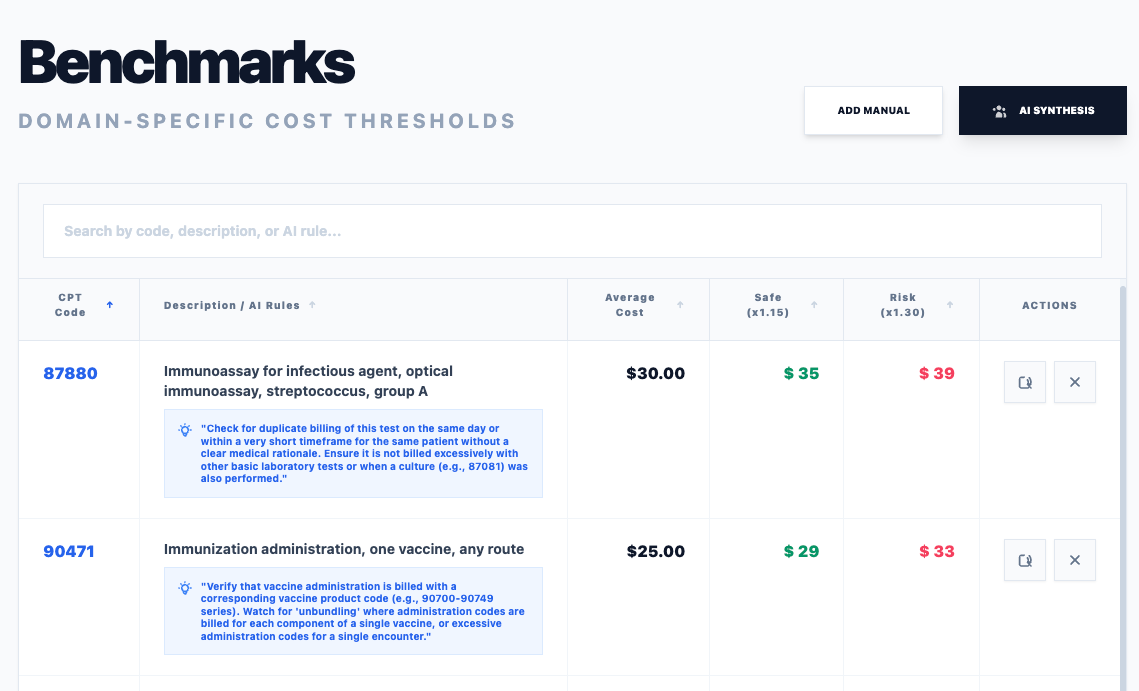
Made hidden revenue visible and actionable
Organizations unable to identify revenue opportunities hidden in documents. We built a data intelligence layer that surfaced actionable insights in real-time.
Frequently Asked Questions
What is AI System Development?
AI System Development is the design and engineering of business systems where AI supports real workflows, decisions, knowledge access, or operations. It is different from adding a standalone AI tool because the intelligence is integrated into how work actually happens.
How is this different from building an AI chatbot?
A chatbot may be one interface, but an AI system includes the data architecture, permissions, integrations, model behavior, feedback loops, user experience, and operational controls required for reliable use. The goal is business capability, not a conversational interface by itself.
When should an organization invest in AI development services?
AI development services are most useful when the organization has recurring decisions, information-heavy workflows, unused knowledge, manual analysis, or inconsistent execution that AI could improve. The initiative should begin with the operational problem, not with the model.
Can AI be integrated with existing software?
Yes. AI integration services can connect AI capabilities to existing applications, databases, documents, workflows, and user permissions. The right approach depends on data quality, system access, security requirements, and how people need to use the intelligence.
How do you reduce risk in enterprise AI development?
Risk is reduced by validating the use case, designing human review where needed, controlling data access, measuring model behavior, planning feedback loops, and integrating AI only where it improves a real decision or workflow.
Does every AI initiative need custom software?
No. Some initiatives can use existing tools or platforms. Custom AI software development becomes more valuable when the workflow, data, integrations, governance, or user experience needs are specific to the organization.
Read before building the next AI system
Useful AI starts with operational clarity. These perspectives help leaders think through workflows, decision quality, model behavior, and the conditions required for production adoption.




Ready to make AI part of
real operations?
When intelligence needs to support decisions, workflows, and knowledge at scale, the system around the model matters as much as the model itself.