Reviewing fewer cases, and the right ones
Cases and documents are structured and prioritized so review effort goes where it changes the outcome.
What they wanted
Organizations needed to review more cases without adding review capacity. They were not short of data. They were short of a way to decide which cases deserved attention first.
The problem
The information was already there. It just wasn’t usable.
- Claims and supporting documents were stored as PDFs and fragmented data
- Teams spent hours reviewing documents manually
- High-value opportunities were buried among low-priority cases
- Decisions were slow and inconsistent
By the time a case was escalated, the opportunity was often reduced or lost.
What was getting in the way
Existing approaches failed to turn data into decisions.
Information was unstructured and difficult to interpret
Tools focused on storing data, not prioritizing it
Manual review created bottlenecks
There was no consistent way to evaluate risk, value, and next steps
Teams had access to the data, but not to clarity.
THE VALIDATION PHASE
Validating the workflow first meant the build targeted the real constraint instead of the assumed one.
Reviewed
Value
Acting On
What was done
Instead of reviewing everything, the system was designed to focus only on what matters.
- Documents such as claims and PDFs became structured inputs for decision-making
- Each case was evaluated to identify risk, value, and next action
- Low-impact cases were filtered out early
- High-value opportunities were surfaced immediately
What mattered was no longer buried in what didn’t.
Here’s what that looks like in practice.
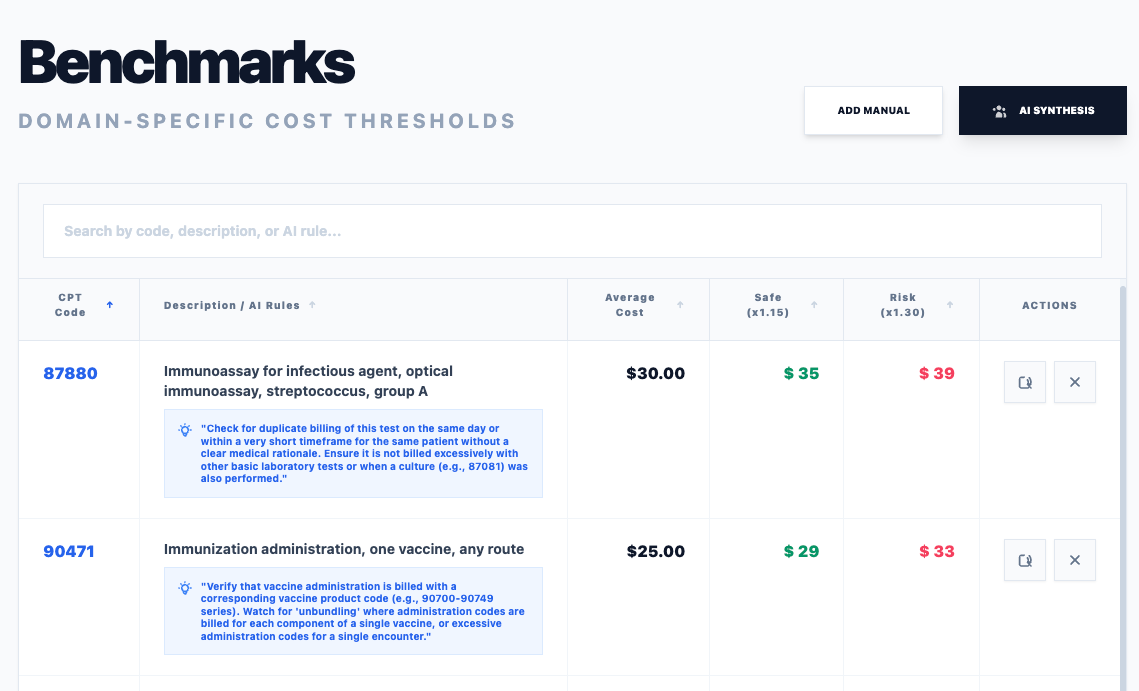
Each case is automatically analyzed to highlight expected cost, safe thresholds, and potential risk before action is taken.
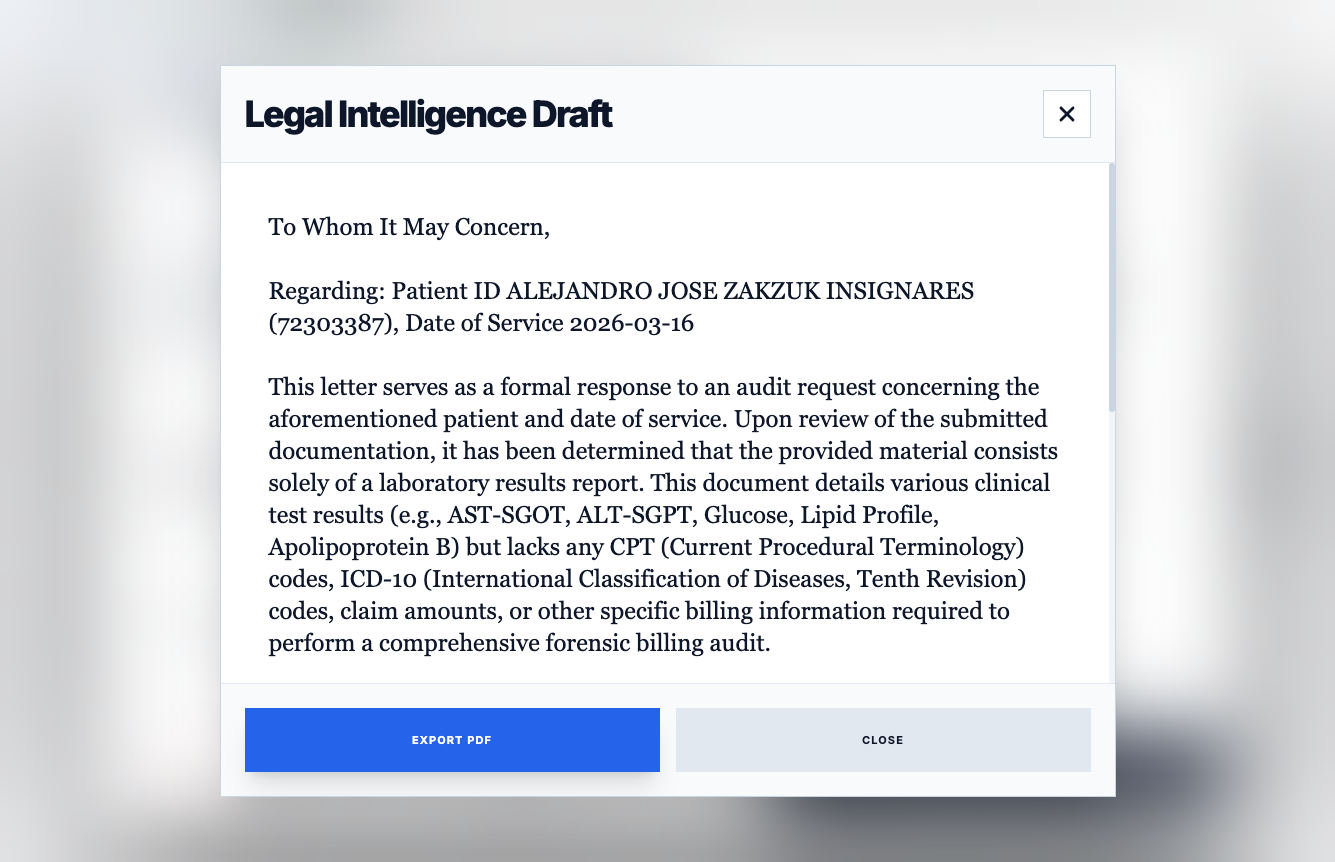
Each case can generate a structured response, helping teams act on findings immediately without additional manual work.
What changed
Work shifted from reading every case to deciding on the ones that mattered. The system does not make the decision — it puts the reviewer in front of the cases where their judgment is worth spending.
- Review effort concentrated on the cases where it changed the outcome, instead of being spread evenly across all of them.
- Low-impact cases were identified and set aside before review time was spent on them.
- Decisions became consistent and repeatable, because each case arrived with risk, value and next action already structured — with the reviewer still making the call.
We weren’t missing data. We were reviewing the wrong things.
Effort was spread evenly across cases that were not equally consequential. Once that was clear, the system was designed to tell them apart before anyone spent time on them.
The constraint is rarely the tooling. It is what the system was optimized for.
When effort goes up and outcomes don't, the constraint is usually somewhere the team isn't looking.
Start with validation. That's where clarity begins.
The same approach can be applied to operational systems.