System Recovery
Recover stability, visibility and engineering control before pursuing further transformation.
Sometimes organizations do not need to replace their software. They first need to recover control over it.
Soluntech helps leadership teams stabilize critical systems, clarify technical risk, and restore enough confidence to make the next engineering decision with discipline.

Recovery logic
Stability first. Transformation second.
When software becomes difficult to trust.
Many organizations reach a point where a critical system still works, but teams no longer trust it. Releases feel unpredictable. Production incidents become familiar. Small changes create unexpected failures. Integrations break without clear ownership.
The system may continue supporting the business, but operating it becomes an exercise in caution. Engineering teams avoid touching critical code. Business teams adjust around undocumented behavior. Leaders lose visibility into what is fragile, what is stable, and what can safely change.
System Recovery is the discipline of restoring stability, visibility, and engineering control before the organization pursues broader modernization, AI-native transformation, or new system development.
When recovery becomes necessary
Software System Recovery matters when the platform is still important to the business, but operational risk has become too high to keep treating issues as isolated defects.
The system still works, but engineering confidence has been lost in the areas that matter most.
What must be stabilized
- Which code paths teams avoid
- What dependencies are unclear
- Where hidden business rules need visibility
Recovery should restore enough architecture visibility for teams to change critical areas safely.
What we recover
We recover the visibility and control required to operate critical software with confidence.
Soluntech provides Application Recovery, Software Stabilization, and Enterprise System Recovery for organizations whose systems have become difficult to operate, maintain, or improve. The work focuses on business continuity, not technical support or break/fix maintenance.
Recovery often begins by understanding where the organization has lost control: unstable components, fragile integrations, unreliable deployments, poor observability, undocumented architecture, or technical debt that slows every initiative.
Once stability is restored, the organization can decide whether the next step is Legacy System Modernization, Platform Evolution, AI-Built Software Evolution, AI-Native Transformation, or a more focused improvement through Workflow Automation. For strained Knack applications, recovery may begin with focused Knack Development to recover structure, permissions, integrations, and maintainability before broader system decisions are made. When the future system needs new capabilities, recovery may also connect to Custom Software Development, AI System Development, or Dedicated Development Teams for sustained engineering continuity.
Architecture Visibility
Clarifying system structure, dependencies, ownership, and the areas that create recurring risk.
Recovery creates the control required for the next phase of system evolution.
Recovery areas we commonly support
- Architecture visibility and dependency mapping01
- Monitoring, observability, and production diagnostics02
- Critical integrations and recurring failure points03
- Deployment reliability and release confidence04
- Engineering documentation and operational handoff05
How we recover operational control
Our approach focuses on continuity. The goal is to reduce operational risk while giving leaders and engineering teams a clearer path forward.
Assess system health
We examine architecture, deployments, incidents, integrations, data flows, observability, and the operating practices around the system.
Stabilize critical components
We prioritize the failure points and operational risks that most affect business continuity, release confidence, and day-to-day trust.
Create a roadmap for continuous improvement
We define what should be documented, monitored, refactored, modernized, or rebuilt so recovery leads into disciplined long-term evolution.
What System Recovery makes possible
The value of recovery is not that every issue disappears overnight. The value is that the organization regains the visibility and control needed to improve the system with confidence.
Fewer production incidents
Recurring failures can be understood, prioritized, and reduced instead of repeatedly treated as isolated issues.
Safer releases
Teams can approach changes with clearer expectations about risk, dependencies, and operational impact.
Better engineering confidence
Engineers can work with more clarity because architecture, behavior, and ownership are easier to understand.
Improved system visibility
Monitoring, documentation, and diagnostics make it easier to see where problems live and what should change.
Reduced operational risk
The organization can reduce firefighting and make better decisions about where to invest next.
Stronger foundation for modernization
Once stability is restored, modernization or AI-native transformation can begin from a more reliable base.
Built in Practice
These examples show how disciplined engineering can restore trust in systems, workflows, and operating decisions.

Gave doctors back 2+ hours per day from documentation
A clinical team struggling with time-consuming documentation and workflow disruption. We implemented an AI-native solution that automated the heavy lifting of clinical notes.

Made a system 40% faster for therapists
A mental health platform slowed down by inefficient workflows and poor usability. We re-engineered the core architecture to prioritize speed and therapist focus.
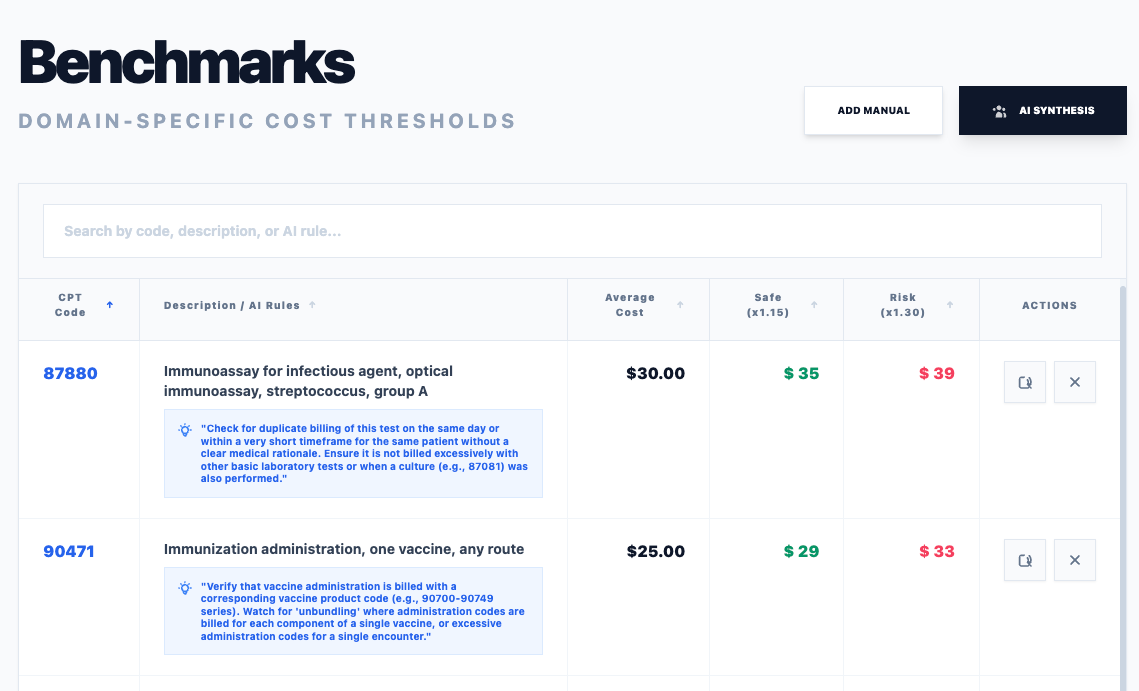
Made hidden revenue visible and actionable
Organizations unable to identify revenue opportunities hidden in documents. We built a data intelligence layer that surfaced actionable insights in real-time.
Frequently Asked Questions
What is System Recovery?
System Recovery is the process of restoring stability, visibility, and engineering control over a software system that has become difficult to operate, maintain, or evolve. It is focused on reducing operational risk before larger modernization or transformation work begins.
How is System Recovery different from modernization?
System Recovery focuses first on regaining control: understanding failures, improving visibility, stabilizing critical components, and reducing operational risk. Modernization focuses on evolving the system for future needs. In many cases, recovery should happen before modernization.
Do we need to replace our software?
Not necessarily. Many unstable systems still contain valuable business logic, data, and workflows. Recovery helps determine what can be stabilized, what should be modernized, and whether replacement is actually necessary.
Can recovery happen without disrupting operations?
Often, yes. Recovery should be sequenced around business continuity. The work usually begins with assessment, visibility, and prioritized stabilization so the organization can reduce risk without introducing unnecessary disruption.
When should organizations prioritize recovery?
Recovery should be prioritized when recurring incidents, risky releases, fragile integrations, poor observability, or undocumented behavior make it difficult to operate or improve the system with confidence.
Read before rebuilding under pressure
Recovery decisions are strongest when leaders understand why systems become hard to trust and what should be stabilized before transformation.



Ready to regain confidence in your systems?
When critical software becomes difficult to operate or change, the next step is recovering enough control to decide what should happen next.