AI is entering its “Netscape moment.” Just as Netscape made the Internet mainstream in 1994, generative AI is moving from labs to everyday workflows. The opportunity is enormous—but so are the risks. History shows that hype without validation collapses quickly. Business leaders who test, adapt, and scale with discipline will be the ones who turn this moment into lasting advantage.
Read MoreYesterday’s founders needed millions and years to test an idea. Today’s founders can validate with AI, low-code, and MVPs in weeks. The difference? Agility now matters more than capital.

Read MoreA proof of concept (PoC) proves it can be built, a prototype shows what it feels like, and a minimum viable product (MVP) tests if the market cares. Founders who skip these steps risk burning time and money, while those who follow the sequence maximize learning and minimize waste.
Read MoreFounders often carry high expectations but struggle with low resilience. This paradox creates a cycle of ambition, self-criticism, and burnout that threatens both founder well-being and startup outcomes. The path forward isn’t just grit—it’s about designing resilience into the startup itself through iteration, support networks, and sustainable practices.
Read MoreMost startups don’t fail because of competition. They fail because of distraction.
Up to 90% of failures come from internal issues—lack of focus, chasing shiny objects, and poor alignment. Competition? Only about 20%.
Startup growth isn’t linear—it follows a J-curve. In the early days, progress feels painfully slow, but once validation compounds, growth accelerates faster than expected. The key is surviving the flat part of the curve without burning out or scaling too soon.
Read MoreThe AI revolution is no longer a distant promise—it’s here, transforming how companies operate, compete, and grow. For CEOs, the opportunity isn’t about chasing futuristic dreams, but about using AI to eliminate inefficiencies, enhance decision-making, and unlock new value. The most successful leaders approach AI as an ally for people, not a replacement, starting small, testing carefully, and expanding with confidence.
Read MoreStartup success isn’t about being endlessly stubborn or constantly flexible—it’s about mastering both. Research confirms that conviction gives founders resilience, but adaptability and pivots drive long-term survival. The best entrepreneurs stay stubborn about the mission, but adaptable about the path.
Read MoreFounders often underestimate the role of intuition. While business models pivot and products evolve, the people you bring into your startup—cofounders, first hires, investors—shape every step. Trusting your gut about people isn’t just instinct, it’s one of the most reliable guides you’ll have in uncertainty.
Read MoreMoving from Seed to Series A isn’t just about raising capital—it’s about changing how you build. Startups must shift from scrappy coding and MVPs to strategic roadmaps, scalable architectures, and security-first practices. These shifts aren’t optional, they’re survival.
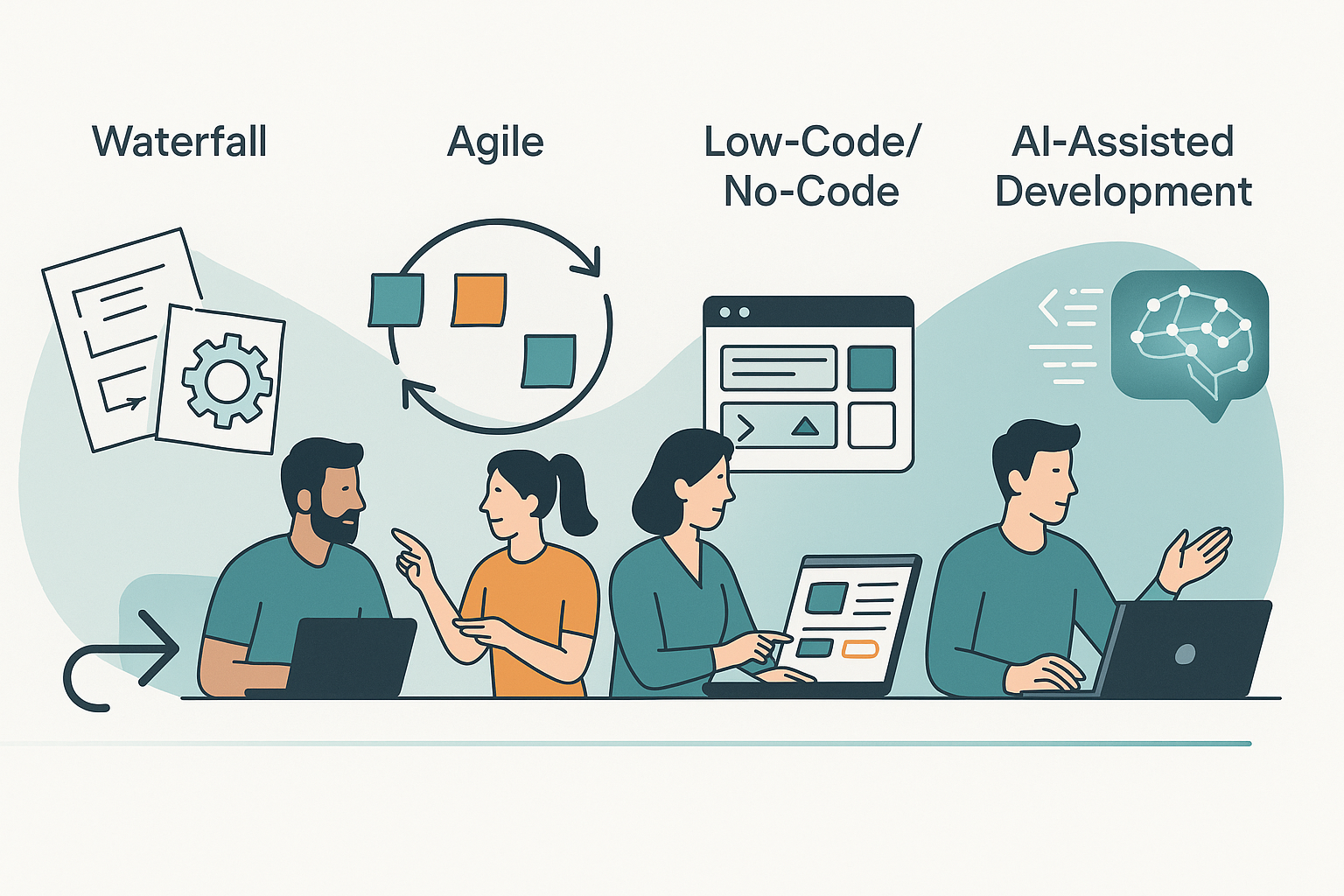
Read MoreSoftware development has shifted from rigid Waterfall methods to Agile, Low-Code, and now AI-assisted approaches. Each era made building software faster and more accessible, but AI is redefining the developer’s role—from writing code to guiding and validating intelligent systems. This blog explores what these shifts mean for businesses today.
Read MoreThe IBM 2025 CEO Study shows that courage, not caution, defines the leaders who thrive in uncertainty. From AI-fueled disruption to data-driven predictability, CEOs must embrace five key mindshifts to stay competitive. In our latest blog, we explore what these shifts mean for leaders ready to adapt boldly.
Read MoreBefore building Clara.Care, we ran multiple Proofs of Concept to test assumptions and filter out the wrong technologies. From discarded mobile apps to failed transcription models, each experiment taught us something critical. This blog shares why PoCs are essential before any MVP, and how they can save founders from costly mistakes.
Read MoreMost CEOs aren’t struggling with AI technology—they’re struggling with people, culture, and leadership. From workforce pushback to ROI uncertainty, the real barriers to AI readiness are organizational, not technical.
Read MoreAI has entered one of the most intimate spaces of human life: love and relationships.
From companion apps that provide emotional fulfillment to dating tools that optimize how singles connect, studies show AI is no longer just helping people find love—it is becoming a partner in love.
Founders often confuse a Proof of Concept (PoC) with a Minimum Viable Product (MVP). One answers if something can be built, the other if it should be built. Knowing the difference — and the right sequence — saves time, budget, and reputation.
Read MoreFor SMB CEOs, the wrong software partner drains time, money, and momentum. The right one becomes a growth multiplier. Here’s how to approach partner selection as a strategic decision—not just a procurement task.
Read MoreAI offers incredible benefits for small and medium businesses, but without ethical guardrails, it can backfire. In this guide, we break down the essentials of AI ethics for SMB founders: how to protect data, avoid bias, stay transparent, and build trust. Practical, actionable, and written for real-world business leaders.
Read MoreDiscover how SMBs can bridge the AI skills gap by building and upskilling their teams. Learn practical strategies for training, hiring, and fostering a culture of continuous learning to successfully adopt AI and drive business growth.
Read MoreChoosing the right AI vendor can make or break your business transformation journey. With the marketplace crowded by bold promises and flashy demos, how do you separate hype from real value? In this guide, we break down the essential steps every founder and business leader should follow to evaluate AI vendors, from defining your success metrics and checking technical credibility to ensuring seamless integration and spotting red flags. Make your next AI investment with confidence, and set your company up for long-term innovation and growth.
Read More