Before Building the Product, We Had to Prove It Could Work
How ArmCare and Soluntech turned complex hardware integrations into a mobile-first sports performance platform through technical validation, incremental development, and a long-term technology partnership.
- Client
- ArmCare
- Industry
- Sports Technology / Athlete Performance
- Partnership
- Since 2017
- Platforms
- iOS, Android, Web
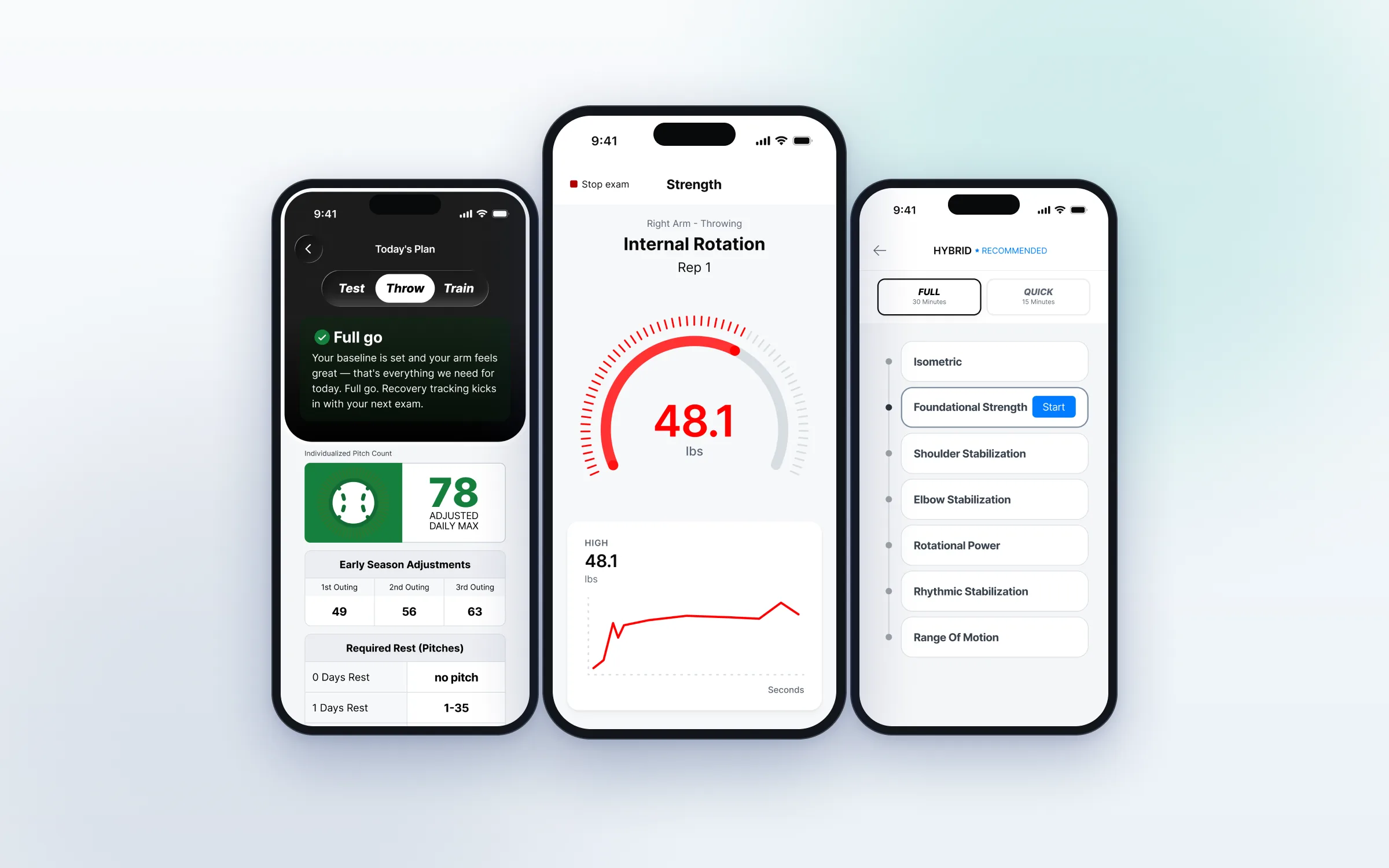
The Challenge: Turning Physical Measurements Into a Digital Product
When ArmCare began working with Soluntech in 2017, the company was exploring how technology could help baseball pitchers better understand and manage arm strength and conditioning.
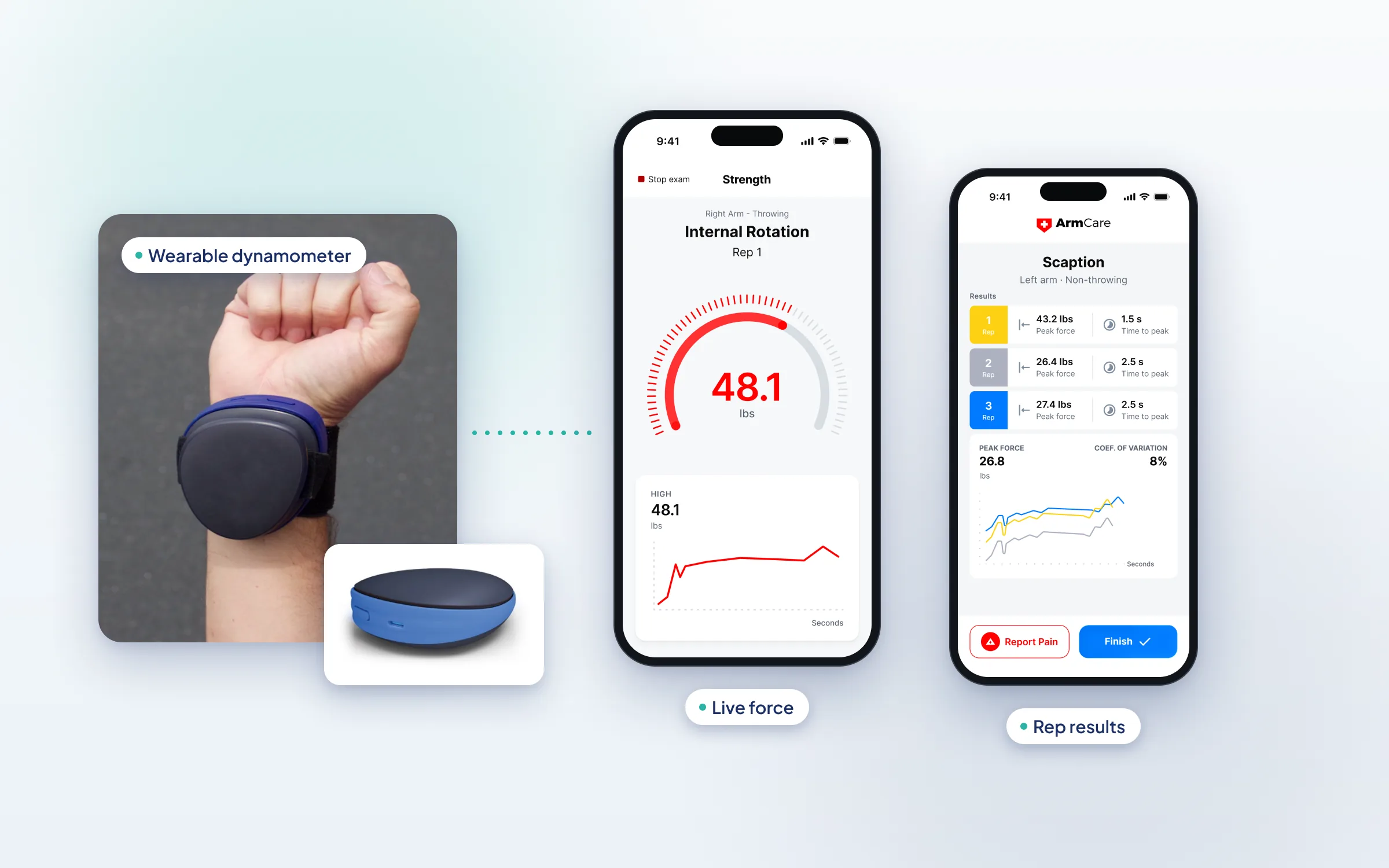
The concept depended on a physical device: a dynamometer capable of measuring force during specific wrist and arm movements.
The original equipment was large, metallic, and weighed approximately five to six kilograms. It could capture measurements, but turning those measurements into usable information presented a significant technical challenge.
Data had to be retrieved through the device's API, which returned complex binary codes. Those codes then needed to be interpreted and translated into values that athletes and coaches could understand.
Before ArmCare could build a useful digital experience around the device, one fundamental question needed an answer:
Could the hardware reliably provide the information the product required?
The First Critical Decision: Validate the Integration Before Building the Platform
ArmCare initially considered using Knack, a no-code platform, to build its application.
But the challenge was not simply creating screens, forms, or dashboards. The product depended on a specialized hardware integration whose technical feasibility had not yet been established.
Rather than commit immediately to a full application, Soluntech recommended starting with technical validation.
The initial work focused on proofs of concept, understanding the device's API, extracting its data, and translating the results into meaningful measurements.
This approach addressed the project's most consequential uncertainty before substantial investment in the surrounding software.
The objective was not to build as much as possible. It was to prove that the essential capability could work.
When the Hardware Changed, the Product Strategy Changed
As the concept evolved, ArmCare transitioned to a smaller, lighter, and more portable dynamometer.
That change improved the physical experience of using the device, but it also introduced an important architectural consideration.
The new hardware offered an SDK designed for iOS and Android applications. Integrating with the device therefore required a mobile approach rather than relying exclusively on a web-based platform.
Soluntech adapted the development strategy accordingly.
An iOS application came first, followed later by Android. A web platform remained part of the product ecosystem, providing coaches with a more accessible way to review measurements, visualize information, and work with their athletes.
The architecture followed the realities of the hardware and the needs of its users, rather than forcing the product into a technology choice made earlier.
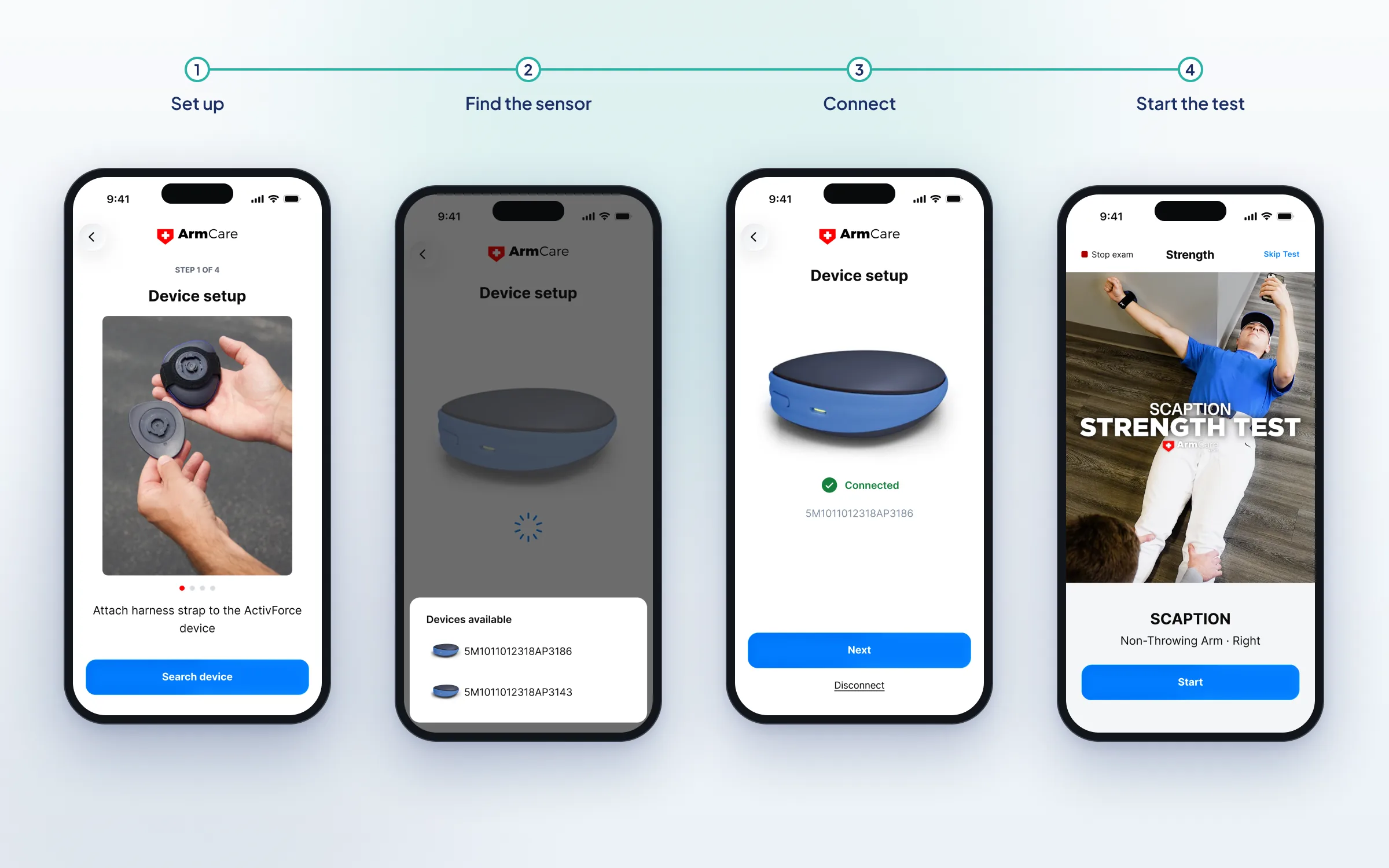
Building the Essential Capability First
The first meaningful product milestone was straightforward: capture the measurements from the device and make them understandable.
That capability created the foundation for everything that followed.
Instead of attempting to deliver a fully featured sports performance platform from the beginning, ArmCare and Soluntech expanded the product incrementally.
As ArmCare developed its market presence and identified new customer needs, the software evolved alongside the business.
Soluntech assembled and coordinated a multidisciplinary team that included iOS and Android developers, frontend and backend engineers, UX/UI designers, QA specialists, and project management.
This allowed ArmCare to expand the product without having to independently assemble and coordinate every technical discipline required.
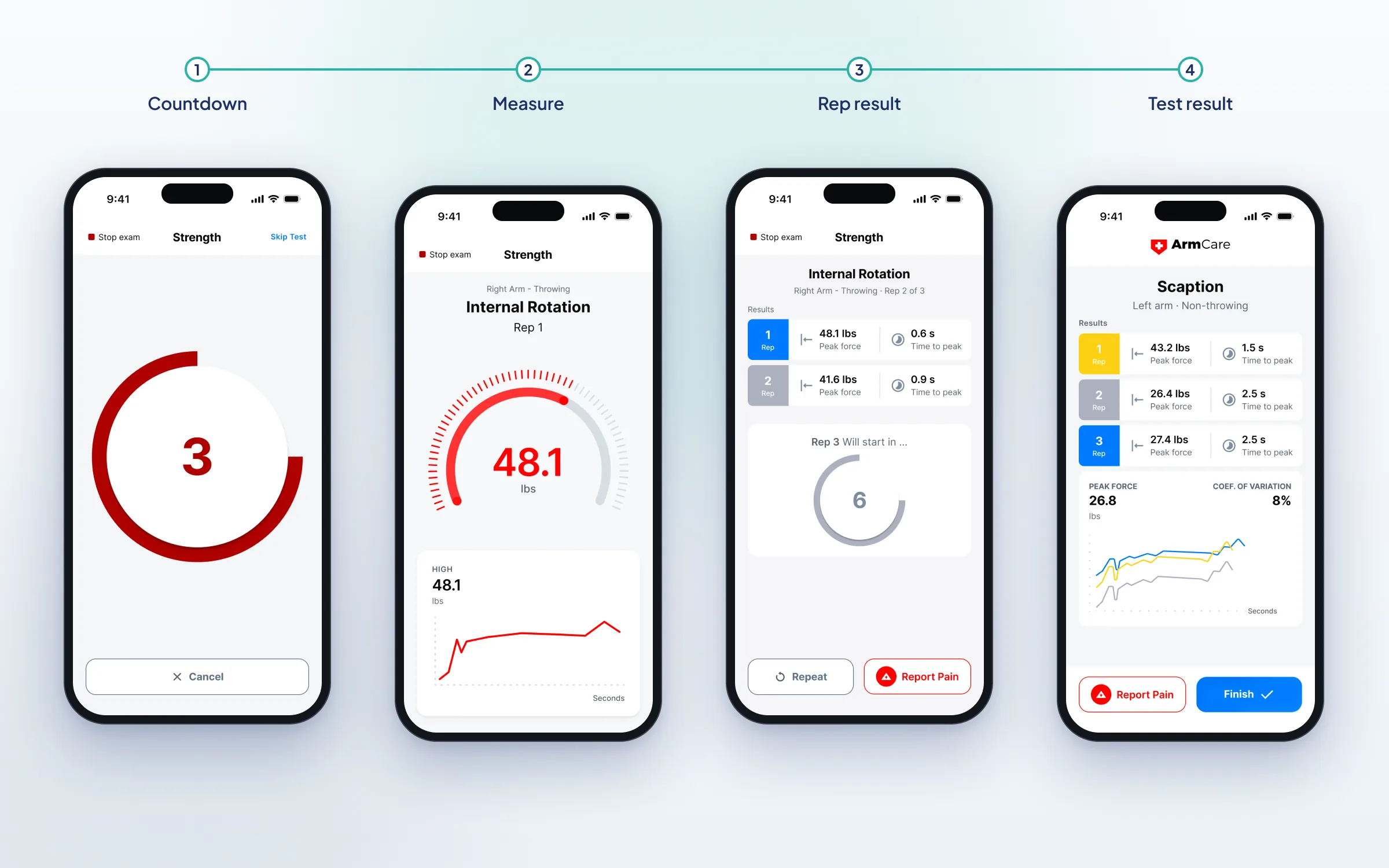
From a Measurement Tool to a Broader Performance Platform
Over the years, ArmCare's product evolved well beyond its initial hardware integration.
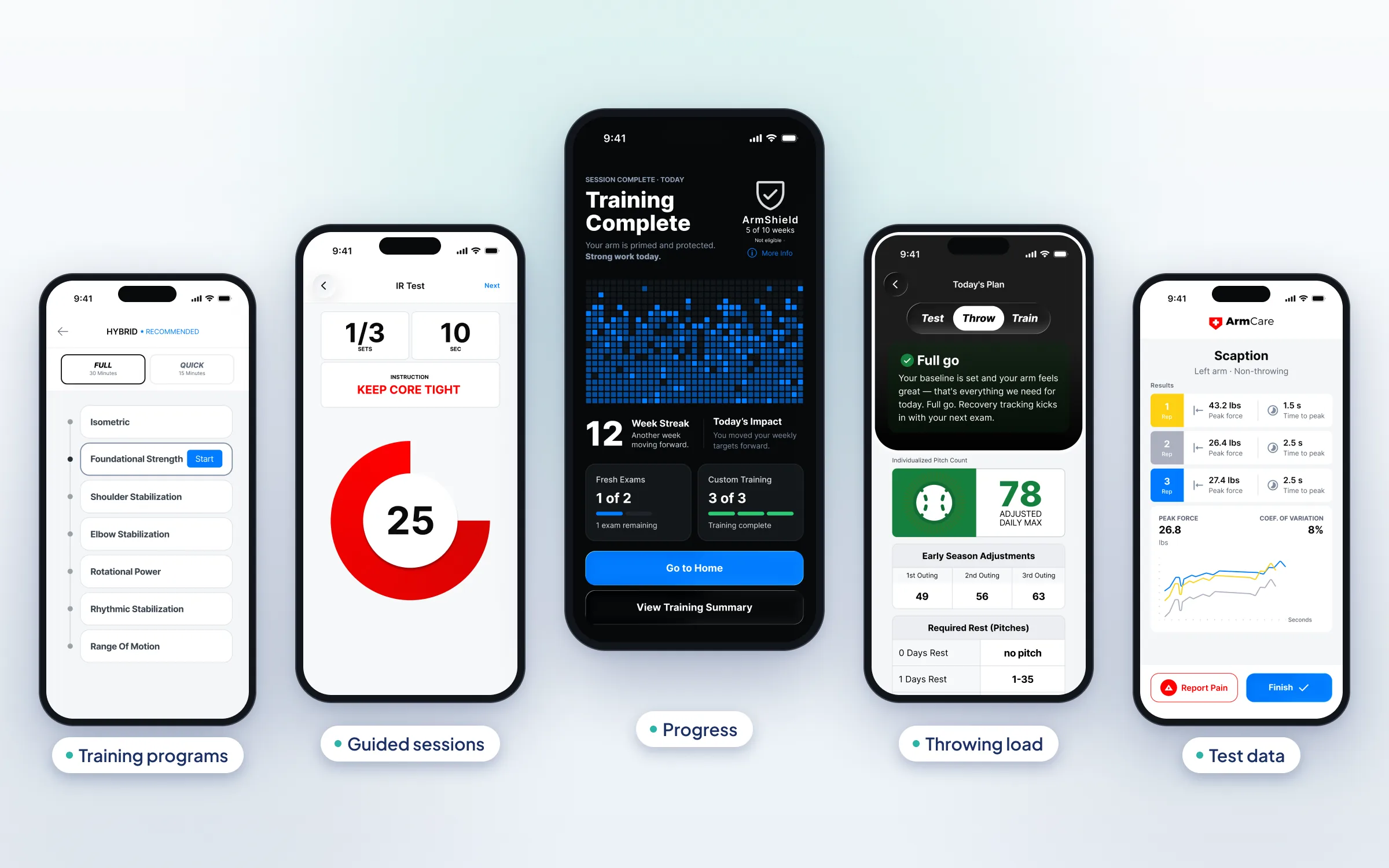
The mobile applications became part of a broader system supporting athletes and coaches. The web-based Coach Portal continued to improve, with enhanced data visualization, player statistics, and capabilities for managing training programs.
Additional integrations, including payment systems, supported the commercial evolution of the platform.
Each new capability built on the technical foundation established during the earlier stages.
The relationship between ArmCare and Soluntech also evolved. What began as technical validation became an ongoing technology partnership supporting product development and continuous improvement.
ArmCare led the product vision, customer relationships, and market development. Soluntech provided the engineering capabilities and execution structure needed to support that evolution.
The Outcome: A Product That Continued to Evolve With the Business
Today, ArmCare operates a commercial sports performance platform with mobile applications, hardware integrations, coaching capabilities, and training programs.
According to figures published by ArmCare, its technology has reached more than 100,000 athletes, alongside adoption across training facilities, schools, and collegiate programs.
Those figures reflect ArmCare's broader commercial success, rather than outcomes attributable solely to Soluntech.
For Soluntech, the most meaningful result is the continuity of the partnership and the progression from a technically uncertain concept to an established product that continues to evolve.
The initial integration challenges did not dictate the limits of the business. They became problems that could be investigated, validated, and resolved through a sequence of informed technical decisions.
What This Experience Demonstrates
Successful software products do not always begin with a complete specification or a fixed architecture.
Sometimes they begin with an unanswered technical question.
ArmCare's experience illustrates why identifying and resolving that question can be more valuable than immediately beginning full-scale development.
It also demonstrates the importance of allowing architecture, investment, and team structure to evolve as the business learns.
The goal was never simply to build an application. It was to reduce uncertainty early, preserve the ability to adapt, and create a technical foundation capable of supporting the product's continued growth.
Related reading
- Testing AssumptionsReduce uncertainty by validating the beliefs that determine whether an initiative deserves further investment.
- MVP StrategyDefine the smallest responsible investment that creates meaningful learning before scaling development.
- Dedicated Development TeamsAdd engineering continuity where execution needs it.