Testing Assumptions
Reduce uncertainty by validating the beliefs that determine whether an initiative deserves further investment.
Teams can validate a proposed solution while leaving the beliefs that justify the investment insufficiently examined.
Soluntech helps leadership teams expose what must be true, decide which uncertainties matter most, and gather evidence before engineering momentum makes the decision harder to reverse.
Validation logic
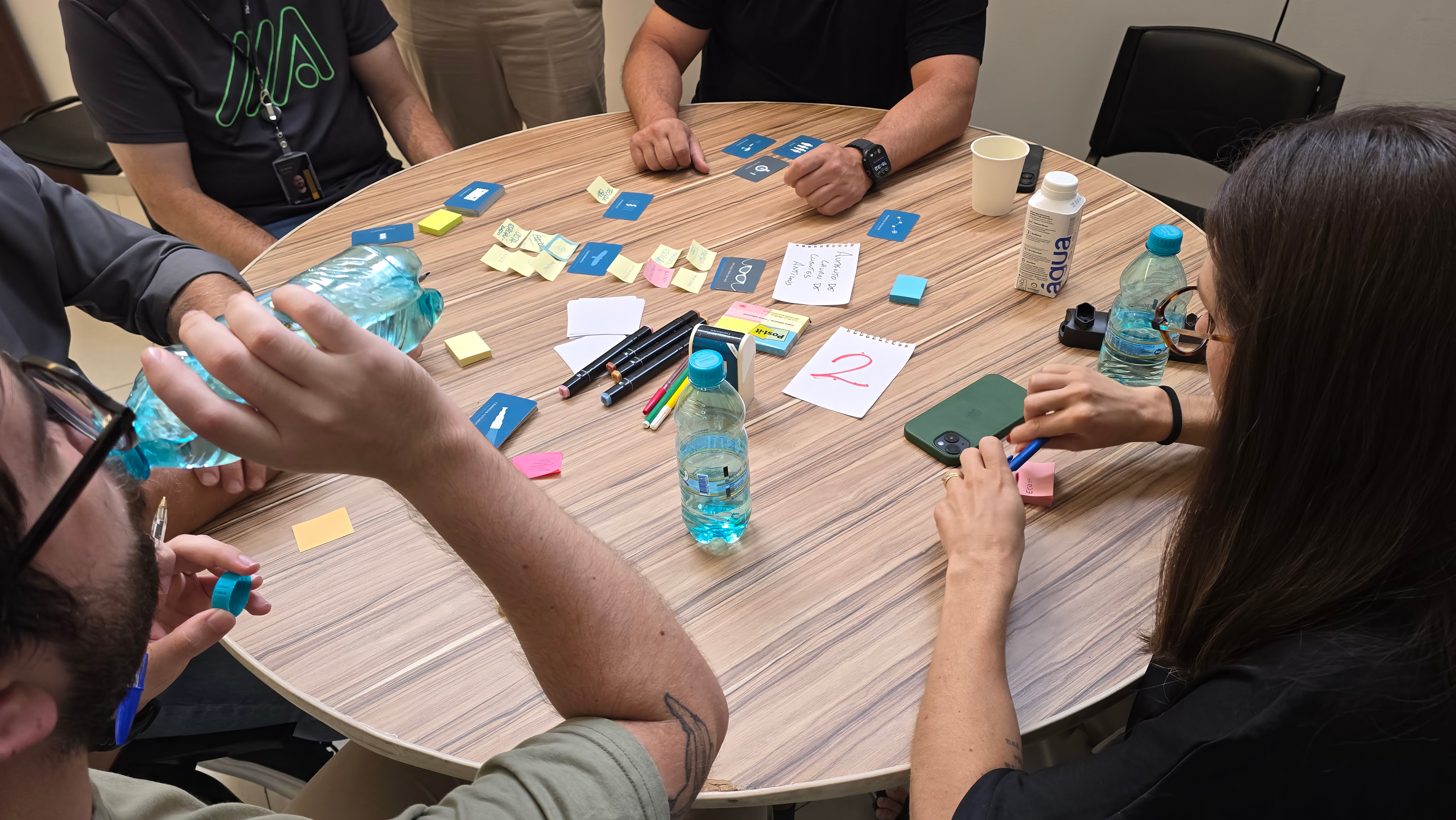
Beliefs become safer when they are made visible, ranked, and tested.
Unexamined assumptions create decision risk.
Assumptions sit inside nearly every strategic initiative. Leaders may believe customers want the feature, AI will solve the problem, integration will be simple, teams will adopt the system, or the bottleneck is technical.
These beliefs need to be distinguished from what the available evidence supports. The risk is that engineering often begins before the organization has examined which beliefs could invalidate the initiative if they prove wrong.
Testing Assumptions reduces execution risk by reducing decision uncertainty. It replaces premature confidence with evidence about what deserves further investment.
When Testing Assumptions becomes necessary
Testing Assumptions is most useful when a decision depends on beliefs that feel plausible but have not yet been tested against users, operations, technology, data, or economics.
The opportunity may be credible, but the decision still depends on beliefs that could change scope, timing, budget, or whether the initiative should proceed.
What we clarify first
- Which unknowns could change the investment decision
- What evidence already exists
- Which assumption should be tested first
Assumption testing should begin by ranking uncertainty by decision risk.
What we test
Assumptions are prioritized by risk, not by how strongly the organization believes them.
Soluntech helps leaders identify which beliefs could change an investment decision and what evidence is needed before committing further.
We help validate assumptions around customer need, workflow behavior, technical feasibility, data availability, AI suitability, organizational readiness, implementation constraints, expected business outcomes, and investment justification.
This work often follows or runs alongside Product Discovery when the team needs to clarify the problem and expose the assumptions behind a proposed direction. When the organization is unsure where uncertainty exists, the Validation Assessment can help organize the current thinking before deeper assumption testing begins.
Assumption testing is not market research, Lean Startup coaching, or UX research by another name. It is executive decision validation: a way to understand whether the initiative deserves more investment, a different path, or a pause.
Customer Need
Whether the problem is real, painful enough, and understood clearly enough to justify action.
The value is not more documentation. The value is knowing which beliefs need evidence before the organization spends more.
Decision artifacts we commonly produce
- Assumption Map01
- Evidence Matrix02
- Validation Priorities03
- Risk Ranking04
- Decision Brief05
From assumptions to evidence
Our approach is intentionally lightweight. The goal is to generate meaningful evidence around the assumptions that could change the decision.
Expose assumptions
We separate facts from beliefs and identify the consequential assumptions that could change whether the initiative proceeds.
Prioritize uncertainty
We rank assumptions by decision risk, define the evidence needed, and agree on criteria for proceeding, adjusting, pausing, or stopping.
Validate and interpret evidence
We use proportionate interviews, prototypes, workflow observations, or operational tests, then interpret the evidence against the decision criteria to recommend proceeding, adjusting, pausing, or stopping.
What Testing Assumptions makes possible
Testing assumptions does not remove every unknown. It makes the most dangerous uncertainties visible early enough to influence the decision.
Stronger investment decisions
Leadership can decide whether the initiative deserves more funding, more evidence, or a different direction.
Fewer avoidable rebuilds
Teams can avoid building around beliefs that should have been tested before development began.
Evidence-based prioritization
Roadmaps can be shaped by risk and evidence instead of internal preference alone.
Better executive alignment
Stakeholders can align around what is known, what is believed, and what should be tested next.
More confident roadmap decisions
The team can move forward with clearer reasoning about scope, sequence, and investment.
Earlier detection of strategic risk
The organization can surface weak assumptions before they become expensive engineering problems.
Built in Practice
These examples show how stronger decisions and disciplined validation thinking can shape better systems and reduce execution risk.

Built a clinical documentation workflow inside the consultation
A clinical team's documentation was consuming time and interrupting the consultation itself.

Re-engineered a system around therapist workflows
A mental health platform had become slow and difficult to use for the people who depended on it daily.
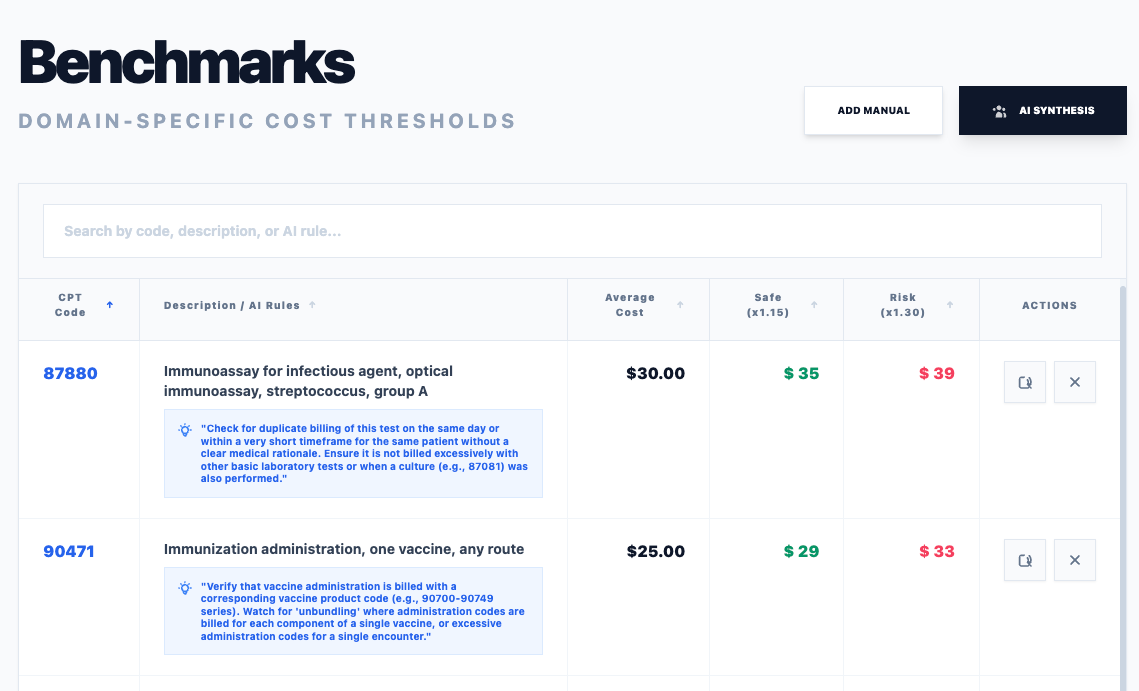
Built document intelligence for case review
Review effort was spread evenly across documents regardless of which ones could change the outcome.
Frequently Asked Questions
What is assumption testing?
Assumption testing is the process of identifying and validating the beliefs that a software, AI, or operational initiative depends on. It helps leaders understand what must be true before the organization commits more time, budget, or engineering capacity.
Why is testing assumptions important before software development?
Software development becomes expensive when teams build around untested beliefs. Testing assumptions helps reduce the risk of building the wrong product, automating the wrong workflow, or investing in a solution that does not create the expected business outcome.
How is this different from market research?
Market research often studies a market, audience, or demand pattern. Testing Assumptions focuses on the specific beliefs behind a decision: customer need, operational reality, technical feasibility, adoption, data readiness, AI suitability, ROI, and implementation constraints.
Can assumption testing prevent building the wrong product?
It can help reduce that risk. It does not guarantee the perfect product, but it can expose weak beliefs early enough for the organization to adjust scope, test further, change direction, or decide not to build.
How long does assumption validation take?
The timeline depends on the number and complexity of assumptions, the evidence already available, and the type of validation required. The goal is to keep the work focused enough to influence the decision before major engineering investment begins.
What happens if assumptions prove incorrect?
That is often a useful outcome. Incorrect assumptions can lead to a narrower scope, a different solution, a prototype, a new research question, or a decision to pause before spending more. Finding this before development gives the organization an opportunity to change direction before committing further.
Does this replace Product Discovery?
No. Product Discovery clarifies the broader problem, outcome, user, and investment logic. Testing Assumptions focuses specifically on the beliefs that could invalidate the initiative. The two disciplines often work together.
How does this relate to the Validation Assessment?
The Validation Assessment helps organizations organize current thinking around uncertainty and receive a personalized Validation Brief. Testing Assumptions is a deeper capability for teams that need to prioritize and validate the beliefs behind a strategic initiative.
Read before turning beliefs into scope
These perspectives help leaders think through uncertainty, assumptions, AI fit, MVP boundaries, and the cost of building before evidence exists.




Ready to replace assumptions with evidence?
Use the assessment to organize current uncertainty, or speak with us when the decision needs deeper validation before engineering begins.