Platform Evolution
Move beyond platform limitations without assuming that a full migration is the only answer.
No-code and low-code platforms can help organizations move quickly, validate ideas, and build useful operational systems.
As the business evolves, however, the platform may begin creating limitations around functionality, integrations, scalability, security, ownership, or cost.
Platform logic
Extend, decouple, transition, or rebuild only when evidence supports it.
A platform that helped the business grow can eventually become a constraint.
That does not mean the original platform decision was wrong. It may have been exactly what the organization needed at the time.
The question is whether the current system can continue supporting the business without creating disproportionate cost, operational friction, technical risk, or dependency on platform limitations.
Platform Evolution helps leadership teams decide whether to extend, optimize, decouple, transition, or rebuild based on the system's role in the business.
Signs the platform may now be constraining the business
The issue is not that no-code or low-code platforms are inherently limited. The issue is whether the business now requires more control than the platform can reasonably provide.
The platform is being asked to support operational complexity beyond its original role.
What needs clarity
- Which workflows depend on workarounds
- Where business rules are scattered
- What should remain inside the platform
Map the current operating logic before deciding whether to optimize, extend, or decouple.
Evolution does not always mean migration
The right evolution path depends on the system, not on a predetermined technology preference.
Soluntech helps determine whether the organization should retain the existing platform, optimize the current implementation, add custom interfaces, introduce APIs or middleware, move business logic into external services, replace selected modules, decouple critical data or workflows, or transition incrementally.
A complete migration may sometimes be necessary, but it should be the result of analysis rather than the starting assumption. Some systems are better served by Workflow Automation, targeted Knack Development, or a staged path through Legacy System Modernization.
When the platform can no longer carry the business responsibly, the next step may involve Custom Software Development, focused System Recovery, or continuity through Dedicated Development Teams.
Current architecture and data model
Understand how workflows, data, roles, automations, scripts, and integrations are currently connected.
The best platform decision protects current operations while creating room for future change.
What we evaluate
- Architecture, data model, and operational dependencies01
- Platform limitations, performance, and scalability02
- Integration, security, and compliance requirements03
- Licensing, total cost of ownership, and data portability04
- Business continuity and migration risk05
Possible evolution paths
A platform can evolve in more than one direction. The right path is the one that reduces operational risk while preserving business continuity.
Extend
Preserve the platform while adding custom services, integrations, interfaces, or external capabilities.
Decouple
Move selected data, logic, or workflows outside the platform while maintaining business continuity.
Transition
Replace the platform progressively through a controlled roadmap rather than a disruptive full migration.
Rebuild
Develop a fully customizable system when platform constraints create greater risk than replacement.
Evolve the system without disrupting the business it supports.
The objective is not technological independence for its own sake. It is an operational system that can continue adapting as the business changes, without unnecessary replacement, uncontrolled complexity, or avoidable migration risk.
Clear platform decision
Leadership understands whether to retain, extend, decouple, transition, or rebuild based on evidence.
Reduced vendor dependency
Critical data, logic, and workflows can move toward stronger ownership where it matters.
Lower migration risk
If transition is needed, it can be sequenced without treating disruption as inevitable.
Better integration reliability
Data movement and external services become more intentional and less dependent on fragile connectors.
Improved cost clarity
Platform economics can be compared against custom extension, selective replacement, and long-term control.
More adaptable operations
The system can keep changing as workflows, teams, requirements, and business priorities evolve.
Built in Practice
See how Soluntech evolves operational systems through integration reliability, staged modernization, and disciplined engineering decisions.

Built a clinical documentation workflow inside the consultation
A clinical team's documentation was consuming time and interrupting the consultation itself.

Re-engineered a system around therapist workflows
A mental health platform had become slow and difficult to use for the people who depended on it daily.
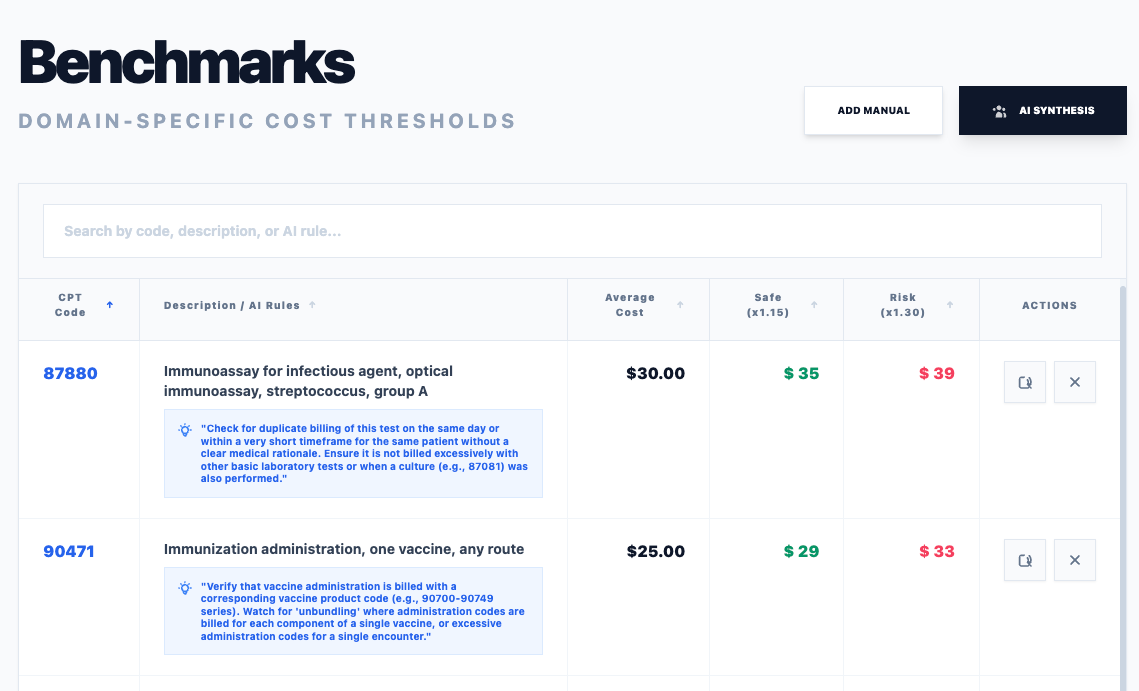
Built document intelligence for case review
Review effort was spread evenly across documents regardless of which ones could change the outcome.
Frequently Asked Questions
Does Platform Evolution mean leaving a no-code or low-code platform?
Not necessarily. The right path may be to retain and optimize the platform, extend it with custom services, decouple selected workflows, or transition gradually. A full migration should be evidence-based.
When should a platform be replaced?
Replacement becomes more appropriate when platform constraints create greater operational, financial, security, or scalability risk than a controlled transition would create.
Can Soluntech help extend an existing platform?
Yes. We can add custom interfaces, APIs, middleware, external services, integrations, reporting, and workflow logic when extending the platform is more responsible than replacing it.
Which platforms does this apply to?
This applies broadly to no-code and low-code systems such as Knack, Caspio, Bubble, Retool, Glide, Power Apps, and similar platforms. The decision is about system fit, not about assuming any platform is inherently unsuitable.
How do you reduce migration risk?
Migration risk is reduced by clarifying dependencies, protecting business continuity, sequencing the transition, decoupling critical data or workflows, and replacing only what evidence shows should change.
Related Insights
Explore executive perspectives on platform constraints, system modernization, operational complexity, and long-term software evolution.



Is the platform still the right place for this system?
We can help determine whether the right next step is extension, selective replacement, architectural decoupling, or a controlled transition.