AI-Built Software Evolution
You built it with AI. Now you need to know if you can trust it in production.
AI-assisted development has made it easier than ever to turn an idea into working software. But when real users, important data, integrations, or day-to-day operations depend on it, a different question emerges: is it ready for production?
Soluntech helps you understand what you have, identify what creates real risk, and evolve what needs to change — without assuming you need to start over.
Production logic
Keep the speed. Add the discipline to grow.
Building working software has become dramatically easier. Knowing whether it is ready for production has not.
AI-assisted development is changing where software teams enter the picture. A founder may arrive with a working application. An existing product team may already have built a new feature, workflow, or module.
In both cases, the software may work.
The uncertainty begins when it needs to carry real responsibility.
Real users. Important data. Payments. Integrations. Existing systems. Higher usage. Security requirements. Continuous releases. Business-critical workflows.
The question has changed from “Can we build this?” to “Can we trust what we've built in production?”
That does not mean AI-built software is inherently unfit for production. Production readiness depends on what the system will be responsible for — and whether its architecture, security, testing, infrastructure, integrations, and operational controls are appropriate for that responsibility.
Common moments when production readiness becomes the question
What began as an idea, prototype, or internal experiment is approaching a real launch.
What needs clarity
- Which workflows real users will depend on first
- Where automated tests are missing
- What releases require manual checking
Introduce focused QA and testing practices around the workflows that carry the most business responsibility.
What Soluntech helps evolve
We start with what the software needs to be trusted with.
Production readiness is not a generic checklist. What matters depends on what the software will be responsible for, what it depends on, and what happens if it fails.
We start there. Then we assess the engineering areas that matter for that responsibility — from architecture, security, and data to testing, integrations, infrastructure, deployment, and observability.
The objective is not to replace everything that already works. It is to determine what can be retained, what must be strengthened, and what creates unacceptable risk.
Some systems need stabilization through System Recovery. Others need selective restructuring, stronger QA, or continuity through Dedicated Development Teams. When parts of the system need deeper engineering, the path may connect to Custom Software Development or AI System Development.
If the product direction is still uncertain, we may recommend returning to Testing Assumptions before hardening the wrong implementation path.
Architecture and codebase
Understand how the system is structured, where complexity has accumulated, and what may constrain continued development.
Production readiness is the bridge between early speed and long-term trust.
A practical path from working software to production confidence
- Architecture review and restructuring01
- Codebase and dependency review02
- Security, access, and environment design03
- Automated testing, QA, and CI/CD04
- Monitoring, observability, and performance05
See what your software appears ready to take on next.
Your software works. The next question is what responsibility it can safely assume. Assess what appears sufficient today, what still needs validation, and where stronger evidence may be needed before you rely on it for more.
Take the Production Readiness AssessmentA self-assessment based on the information you provide.
Your brief groups what your answers show into:
What appears sufficient today
What still needs validation
Where stronger evidence may be needed
Evolution paths
The right path depends on what the system already does well and where production risk is concentrated. A full rebuild is not the default.
Stabilize
Address immediate reliability, security, integration, or deployment risks while preserving the working product.
Strengthen
Improve architecture, testing, infrastructure, observability, and engineering practices so the system can support greater responsibility.
Rebuild selectively
Replace only the components where structural limitations or unacceptable risk make strengthening the existing implementation impractical.
Keep the speed. Add the discipline required to grow.
The goal is not simply cleaner code. It is greater confidence that the system can support what the business now expects from it.
Production confidence
Understand whether the system is ready for the responsibility it is about to assume.
Safer releases
Reduce the risk that changes introduce unexpected failures.
Stronger security posture
Apply controls appropriate to the users, data, and operations the system supports.
Clearer technical ownership
Make it easier for a team to understand and take responsibility for the system.
Improved maintainability
Create a stronger foundation for continued development and change.
A practical path forward
Decide what to retain, strengthen, or selectively rebuild based on evidence rather than assumptions.
Built in Practice
See how Soluntech strengthens software systems through disciplined engineering, architecture decisions, and operational learning.

Built a clinical documentation workflow inside the consultation
A clinical team's documentation was consuming time and interrupting the consultation itself.

Re-engineered a system around therapist workflows
A mental health platform had become slow and difficult to use for the people who depended on it daily.
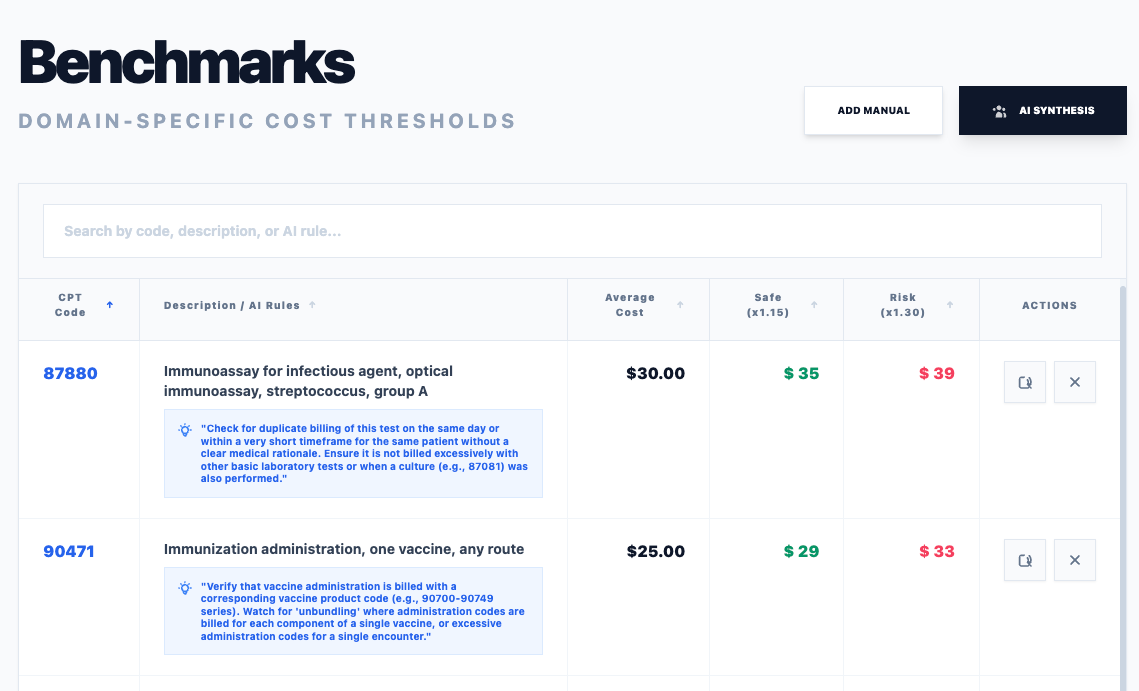
Built document intelligence for case review
Review effort was spread evenly across documents regardless of which ones could change the outcome.
Frequently Asked Questions
Is AI-built software ready for production?
It can be. How the software was built does not determine production readiness by itself. What matters is whether the system's architecture, security, data handling, testing, infrastructure, integrations, and operational controls are appropriate for the responsibility it needs to carry.
Do AI-built applications always need to be rebuilt?
No. Many systems can be stabilized or strengthened without starting over. We first determine what is already working, what creates meaningful risk, and what needs to change. Selective rebuilding is recommended only when the existing implementation creates structural limitations or unacceptable risk.
I already built a working application with AI. Can Soluntech help me determine if it's ready for production?
Yes. We start by understanding what the application needs to support in production and the consequences if it fails. Then we assess the risks that matter for that responsibility. The result may be to retain most of what you built, strengthen specific areas, or selectively rebuild components that create unacceptable risk.
What if I built a new feature for a product that is already in production?
The same principles apply. We assess how the new feature fits the existing architecture, data, security, integrations, testing, and deployment model, then determine what needs to change before it becomes part of the production system.
Which AI-assisted development tools does this apply to?
The specific tool is less important than the system that was produced. This can apply to software built or accelerated with tools such as Claude Code, Codex, Cursor, Lovable, v0, Bolt, Google AI Studio, or other AI-assisted development environments.
When should we evaluate production readiness?
When working software is about to take on greater responsibility — for example, before serving real users, handling important data or transactions, connecting to critical systems, supporting increased usage, or becoming part of an existing production environment.
Related Insights
Explore executive perspectives on production readiness, software risk, AI systems, and disciplined engineering.


Is your AI-built application ready for what comes next?
We can help you understand what is working, where the risks are, and what should evolve before the system takes on greater responsibility.