AI Opportunity Assessment
Determine whether AI is an appropriate response to a defined business, workflow, or decision constraint.
AI should never be introduced because it is available. It should be introduced because it removes meaningful operational friction, improves decision quality, or creates measurable leverage.
Soluntech helps leaders move from AI pressure to investment clarity by assessing where intelligence belongs, where it does not, and what should happen next.

AI opportunity logic
Workflow, data, readiness, and value determine whether AI belongs.
Not every problem needs AI.
Many organizations begin with the wrong question: How can we use AI? The better question is what constrains the business or workflow, how the current system operates, and which intervention is justified.
AI is often applied too broadly, too early, without sufficient data, without workflow understanding, and without measurable outcomes. This creates pilots that look innovative but do not change how the business operates.
AI Opportunity Assessment exists to avoid that mistake. AI-Native is Soluntech’s execution model. AI itself is an intervention that may or may not belong in a system. The starting point is the business constraint, the current workflow, and the evidence needed to compare intervention options.
When AI Opportunity Assessment becomes necessary
AI Opportunity Assessment is most useful when the organization sees potential in AI, but still needs evidence about where it creates real value and whether the conditions for implementation exist.
The organization feels pressure to act, but needs a disciplined way to separate AI opportunities from AI activity.
What we clarify first
- Which business decisions or workflows could benefit
- Where AI would create measurable leverage
- Which opportunities are not ready yet
Assessment should begin with business value and workflow fit before discussing tools.
What we assess
The goal is not to sell AI. The goal is to make a better investment decision.
Soluntech helps leaders understand the current system, compare intervention options, and determine whether AI is justified by the workflow, evidence, and business constraint.
We assess workflow suitability, decision complexity, data quality, AI readiness, expected business impact, organizational adoption, technical feasibility, operational constraints, implementation sequencing, and investment priority.
The result may be to proceed with AI System Development, use Workflow Automation instead, modernize existing software first, improve data quality, maintain traditional software, change the process, continue validation, or recommend no intervention.
AI opportunity work often begins with Product Discovery, connects to Testing Assumptions, and may shape MVP Strategy when a focused first investment is needed. Organizations unsure whether AI belongs in the workflow can begin with the Validation Assessment.
Workflow Suitability
Where decisions, exceptions, information retrieval, or operational friction create a meaningful opportunity for intelligence.
Good AI strategy is not a list of tools. It is a disciplined decision about where intelligence creates value.
Executive artifacts we commonly produce
- AI Opportunity Map, when justified01
- Use Case Prioritization, when relevant02
- Readiness Assessment03
- Data Readiness Review04
- Business Impact Estimate05
From AI curiosity to investment clarity
Our approach starts with the workflow and decision context before evaluating whether AI is the responsible path.
Understand the workflow
We examine where decisions are made, where uncertainty exists, and where operational friction may justify intelligence.
Evaluate AI suitability
We assess whether AI adds meaningful value given the data, workflow, users, constraints, and expected business impact.
Recommend the responsible next step
We recommend AI, automation, traditional software, data improvement, process change, further validation, or no intervention depending on the evidence.
What AI Opportunity Assessment makes possible
The strongest AI investments begin with clarity about value, readiness, workflow fit, and timing.
Clearer intervention decisions
Leadership can decide whether AI or another intervention is justified by operational or decision value.
Fewer unnecessary AI initiatives
The organization can avoid applying AI where automation, modernization, or traditional software is the better answer.
Better executive alignment
Stakeholders can align around whether AI belongs, what it would need to improve, and whether the timing is right.
Evidence-led use case priorities
Where AI is justified, use cases can be prioritized by operational impact, data readiness, workflow fit, and investment logic.
Improved implementation sequencing
Teams can understand what must happen before AI development becomes a responsible next step.
Reduced experimentation waste
AI pilots become more focused because they are tied to explicit business questions and evidence.
Built in Practice
These examples show how disciplined engineering and validation can turn operational friction into useful systems when the opportunity is clear.

Built a clinical documentation workflow inside the consultation
A clinical team's documentation was consuming time and interrupting the consultation itself.

Re-engineered a system around therapist workflows
A mental health platform had become slow and difficult to use for the people who depended on it daily.
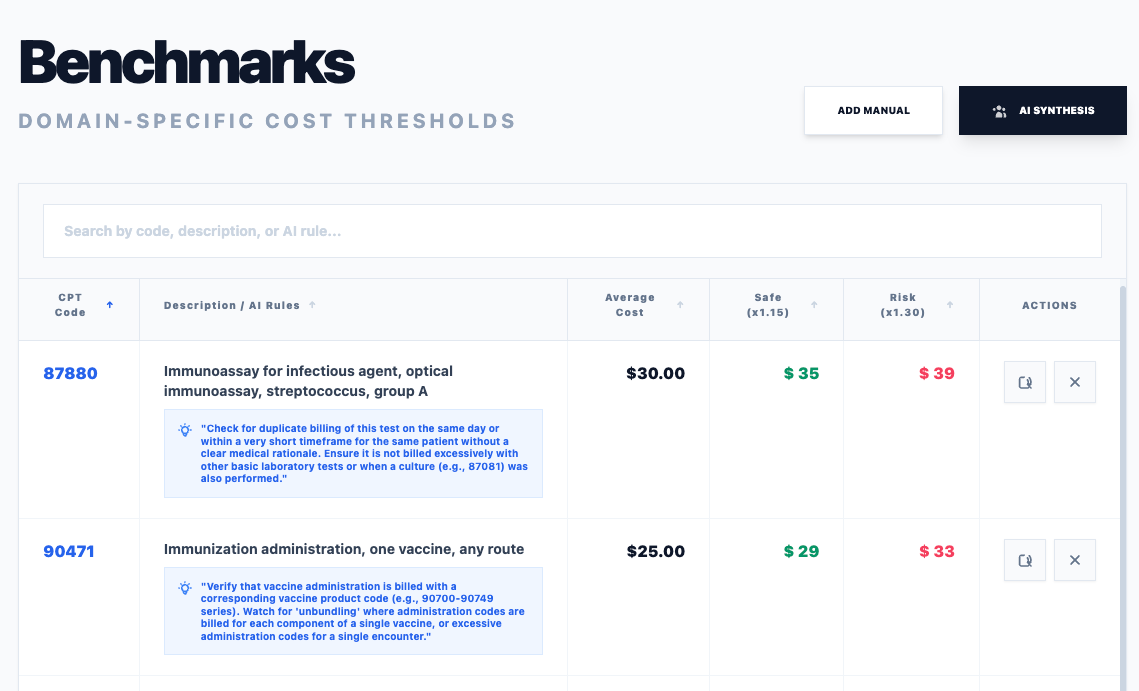
Built document intelligence for case review
Review effort was spread evenly across documents regardless of which ones could change the outcome.
Frequently Asked Questions
What is AI Opportunity Assessment?
AI Opportunity Assessment is the process of determining where AI can create measurable business value, whether the workflow and data support it, and whether implementation should happen now. It helps leaders decide if AI is the responsible next investment.
How is this different from AI consulting?
Our assessment begins with the workflow, decision, data, business impact, readiness, and investment logic. The outcome may be AI, but it may also be automation, modernization, validation, or no AI.
How do we know whether AI belongs in our workflow?
AI belongs when intelligence improves a meaningful decision, reduces operational friction, uses available data responsibly, fits user behavior, and creates measurable leverage. If those conditions are not present, AI may not be the right answer.
Can the assessment recommend not using AI?
Yes. A strong assessment should be willing to recommend no AI when the workflow, data, readiness, or business impact does not justify it. Avoiding the wrong AI investment is a valuable outcome.
What if workflow automation is enough?
Then workflow automation may be the better path. Many operational problems can be solved through clearer process design, integrations, rules, and visibility without introducing AI complexity.
How does this relate to AI System Development?
AI Opportunity Assessment helps decide whether AI should be built and where it should create value. AI System Development is the engineering work that follows once the opportunity, readiness, and implementation direction are clear.
How does this relate to Product Discovery?
Product Discovery clarifies the problem, outcome, users, and investment logic. AI Opportunity Assessment applies that discipline specifically to questions about intelligence, workflow fit, data readiness, and AI value.
How does the Validation Assessment support this capability?
The Validation Assessment helps organizations organize uncertainty around the problem, assumptions, business risk, and next decision. It can be a useful first step when leaders are unsure whether AI belongs in the workflow.
Read before investing in AI
These perspectives help leaders think through AI fit, workflow reality, legacy constraints, decision quality, and where intelligence creates value.





Ready to determine whether AI is the right investment?
Use the assessment to organize the uncertainty, or speak with us when AI pressure needs to become a clearer business decision.